Macular Degeneration
Introduction
When people hear macular degeneration, the first concern is often vision loss. If you or someone close to you has been diagnosed, you’re likely looking for clear, practical answers -not uncertainty or a passive “wait and see” approach.
Our integrative eye care approach takes a grounded and hopeful view of macular degeneration. The focus is on supporting retinal health by addressing the underlying systems that influence how the eyes function, repair, and adapt over time.
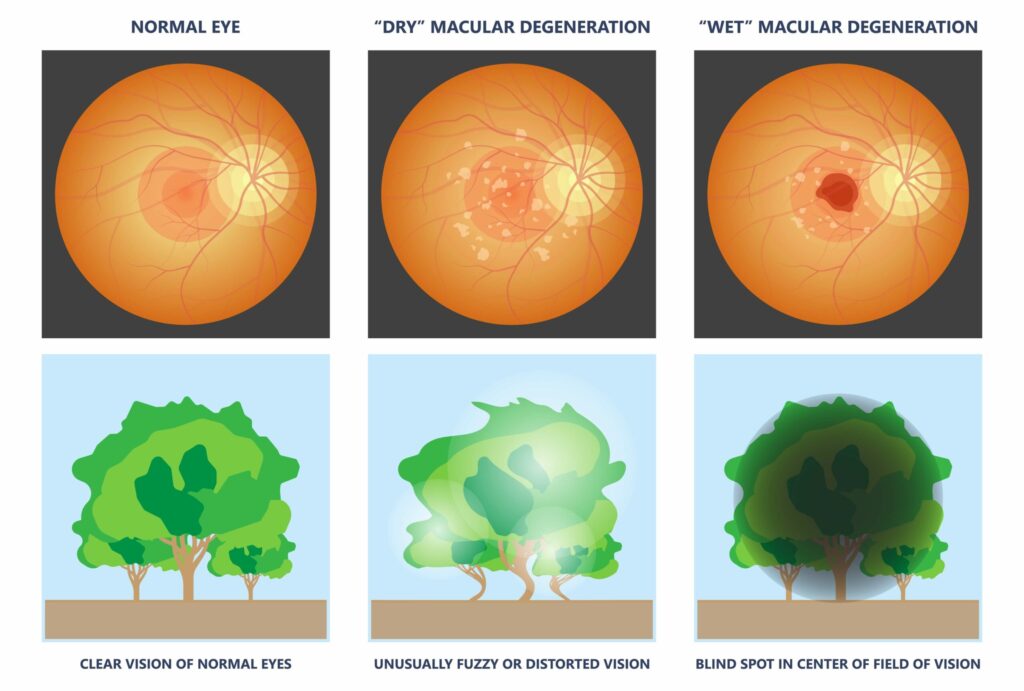
Dry AMD
Wet AMD
What Is Macular Degeneration?
Macular degeneration, or Age-related macular degeneration (AMD or ARMD), is a common leading cause of vision loss in people 60 years or older. It is estimated that approximately 1.4 million Canadians have age-related macular degeneration.
It happens when a part of the retina called the macular is damaged. It causes blurred or reduced central vision, which diminishes your ability to see fine details. Macular degeneration may first develop in one eye and then affect both. The vision loss can progress slowly or quickly but does not affect the peripheral (side) vision.
There are two types of age-related macular degeneration (AMD):
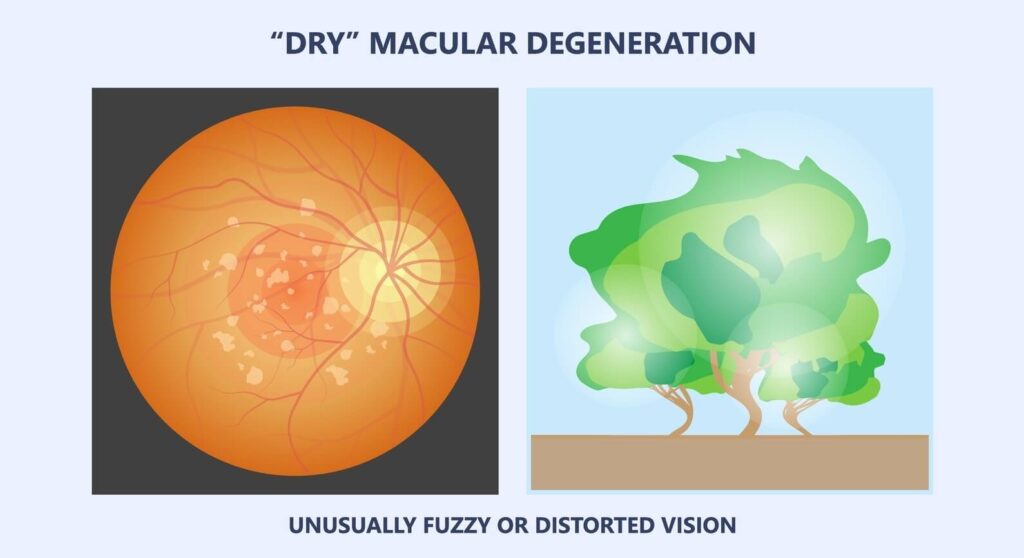
Dry AMD
- The most common type,
- Involves gradual thinning and degeneration of the macula
- Typically progresses slowly over time
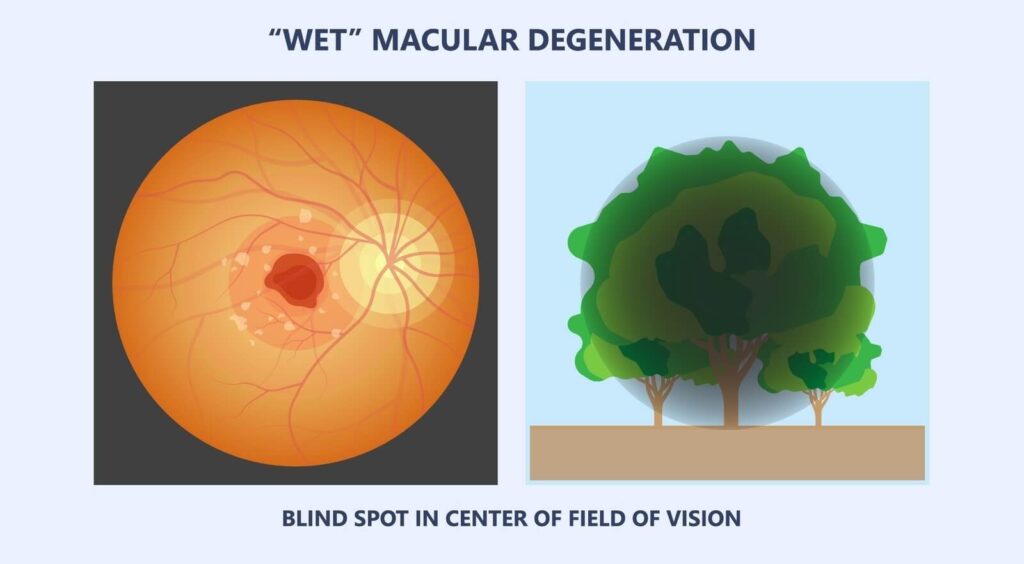
Wet AMD
- Less common but more aggressive
- Caused by abnormal blood vessel growth and fluid leakage under the retina
- Usually managed with medical injections and close ophthalmologic monitoring
Care is offered for both types, with a strong clinical emphasis on dry AMD – especially for individuals who have been told there are limited treatment options.
Looking Beyond the Eyes
From an integrative perspective, macular degeneration is not just an isolated eye condition. It often reflects broader patterns within the body.
Rather than focusing only on the retina, care addresses key systems that strongly influence eye health, including:
- Circulation and oxygen delivery
- Blood glucose regulation
- Chronic inflammation
- Cellular energy production (mitochondrial function)
- Detoxification and waste clearance
The retina is highly metabolically active and sensitive. When circulation declines, inflammation increases, or cells lack energy, the macula is often one of the first areas affected.
Common Contributing Factors
In clinical practice, macular degeneration is frequently associated with:
- Reduced circulation to retinal tissue
- Ongoing low-grade inflammation
- Accumulation of metabolic waste and toxins
- Low cellular energy (ATP), which slows repair and maintenance
These changes tend to develop gradually over many years, which is why macular degeneration is more common later in life.
What Treatment Focuses On
Care is not about reversing decades of change overnight. The goal is to support retinal function, slow progression, and improve stability where possible.
Treatment plans may include:
- Ophthalmic acupuncture to support circulation and nervous system regulation
- Strategies to reduce oxidative stress and inflammation
- Herbal medicine to support and improve retinal circulation, reduce inflammation, and address underlying systemic imbalances.
- Microcu
Many patients report improved visual stability and, in some cases, measurable improvements. Results vary and depend on individual health factors and consistency of care.
How Long Does Treatment Take?
Most patients begin with a focused three-week program designed to build early momentum- supporting circulation, oxygen delivery, and cellular energy. Ongoing care then helps maintain and strengthen these changes through acupuncture, personalized lifestyle guidance, and, when appropriate, Chinese herbal medicine.
Lifestyle Factors That Matter
Supporting macular health extends beyond the clinic. Important factors include:
- Reducing excess sugar and ultra-processed foods
- Prioritizing sleep and recovery
- Staying well hydrated
- Supporting circulation and oxygen delivery
- Minimizing toxin exposure
These factors play a meaningful role in how well the eyes maintain function over time.
The Emotional Side of Vision Changes
Concerns about vision loss can affect confidence, independence, and quality of life. This emotional component is recognized as part of care and addressed with a calm, supportive approach.
Working Alongside Your Eye Doctor
Integrative care does not replace ophthalmologic or optometric management.
Patients are encouraged to continue regular eye exams and monitoring. This approach is designed to complement conventional care, not compete with it.
Key Takeaway
Macular degeneration does not mean that nothing can be done.
While there may not be a single cure, there are meaningful ways to support retinal health, slow progression, and improve visual stability. Addressing circulation, inflammation, and whole-body function creates a better environment for the eyes to function as well as possible.
Concerned about macular degeneration or changes in vision? A consultation can help assess your situation and determine whether an integrative approach may benefit your eye health.