
Glaucoma
Causes, Symptoms, Diagnosis & Whole-Body Treatment Options
Glaucoma is the leading cause of irreversible blindness worldwide. What makes it especially dangerous is that most people experience no pain or obvious symptoms until permanent vision loss has already occurred. For this reason, glaucoma is often called “the silent thief of sight.”
It is also one of the most common eye conditions treated in our clinic.
Open-angle
Low-normal tension
Congenital
Angle-closure
What Is Glaucoma?
Glaucoma is a progressive disease that damages the optic nerve, the structure responsible for transmitting visual information from the eye to the brain.
Conventional medicine primarily defines glaucoma as optic nerve damage related to elevated intraocular pressure (IOP). However, pressure alone does not explain all cases.
From an integrative perspective, glaucoma develops through the interaction of four key factors:
- Elevated eye pressure (IOP)
- Chronic inflammation
- Oxidative stress
- Impaired blood flow and oxygen delivery (hypoxia)
When these factors combine, optic-nerve cells become more vulnerable and degeneration accelerates. Vision loss typically begins in the peripheral field, progresses to tunnel vision, and can ultimately result in blindness if untreated.
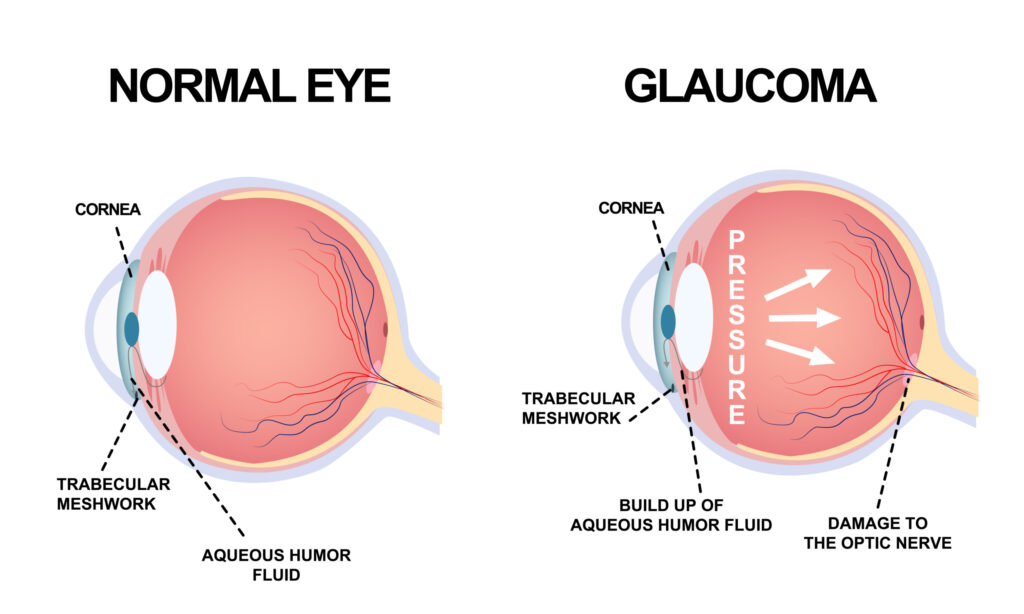
What are the most common causes of Glaucoma?
Common Types of Glaucoma
Primary Open-Angle Glaucoma (POAG)
The most common form. Eye drainage gradually becomes less efficient, leading to slowly rising eye pressure and progressive optic nerve damage.
Angle-Closure Glaucoma
The drainage angle suddenly closes, causing a rapid and dangerous spike in eye pressure. This is a medical emergency.
Pseudo-Exfoliation Glaucoma
Flake-like material accumulates inside the eye, blocking fluid drainage and increasing pressure.
Normal-Tension Glaucoma
Optic nerve damage occurs even though eye pressure remains within the normal range highlighting the role of circulation and nerve vulnerability.
Early Signs & Risk Factors
Glaucoma often develops silently, but early warning signs may include:
- Blurry or hazy peripheral vision
- Halos around lights, especially at night
- Frequent prescription changes
- Family history of glaucoma or optic nerve atrophy
- Chronic steroid use
- Diabetes or high blood pressure
Emergency warning (Angle-Closure Glaucoma):
Sudden eye pain, nausea, vomiting, headache, or rainbow halos around lights require immediate emergency care. Eye pressure can rise above 50 mmHg within hours.
How Glaucoma Is Diagnosed
A comprehensive glaucoma evaluation may include:
- Tonometry – measures intraocular pressure
- Visual Field Testing (Perimetry) – detects silent peripheral vision loss
- Optical Coherence Tomography (OCT) – measures optic-nerve thinning
- Fundus Photography – evaluates optic-nerve cupping
- Contrast Sensitivity Testing – an early marker of optic-nerve stress
Conventional Treatments for Glaucoma
Prescription Eye Drops
Lower eye pressure by reducing fluid production or improving drainage. They do not repair optic nerve damage and may cause irritation or long-term surface issues.
Laser or Surgical Procedures (SLT, Trabeculectomy)
Create new drainage pathways to reduce pressure. Scar tissue can develop over time, sometimes requiring repeat procedures.
Iridotomy
A laser procedure used primarily for angle-closure glaucoma to rapidly relieve pressure. It does not address long-term optic nerve health.
How Ophthalmic Acupuncture & Traditional Chinese Medicine Support Glaucoma
Our treatment approaches glaucoma as a degenerative eye condition influenced by circulation, inflammation, and systemic health.
The primary goals of treatment are to:
- Improve blood flow to the optic nerve
- Increase oxygen and nutrient delivery to eye tissues
- Reduce inflammation and oxidative stress
- Support stable intraocular pressure
Many patients use acupuncture and herbal medicine alongside eye drops or surgery to help maintain optic nerve health and potentially reduce medication burden under medical supervision.
Concerned about macular degeneration or changes in vision? A consultation can help assess your situation and determine whether an integrative approach may benefit your eye health.
How can Traditional Chinese Medicine and acupuncture treat Glaucoma?
The way Traditional Chinese Medicine approaches glaucoma is similar to the treatment of other degenerative eye diseases.
By improving blood circulation and deliver nutrient-rich blood to the tissue and structure around the eyes, the health and function of the optic nerve can be maintained. If the patient is in the early stages of open-angle glaucoma, traditional Chinese medicine (TCM) can be quite successful.
For patients already receiving conventional treatment, TCM can maintain intraocular pressure and may reduce the amount of medication needed. A combination of herbal medicine, acupuncture, lifestyle changes and nutritional support is considered as a comprehensive way to treat glaucoma cases.
Acupuncture stimulates blood circulation to preserve the health of the optic nerve.
Our clinic uses a special form of acupuncture called micro-acupuncture. The system is used specifically to treat various eye conditions and are completely different from traditional acupuncture performed at most clinics. Acupuncture points will be performed on the hands, feet and eyebrows. No Needles go into the eye.
The specific method will increase the delivery of oxygen-rich nutrients into the eyes.