
Central Serous Retinopathy
Central Serous Retinopathy (CSR)
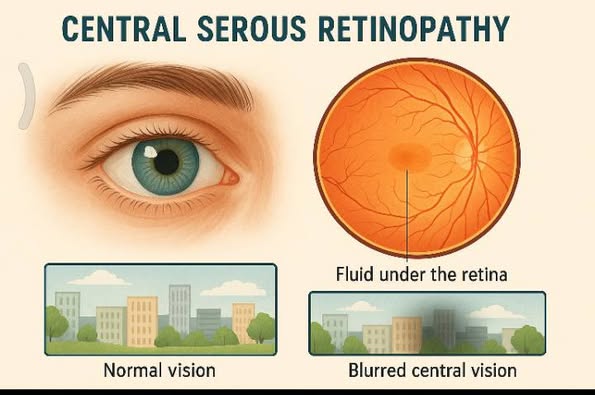
Central Serous Retinopathy (CSR) also known as Central Serous Chorioretinopathy is a condition where fluid builds up underneath the central retina (the macula). This happens when fluid leaks through a weakened layer beneath the retina, causing the macula to lift slightly. As a result, vision may suddenly become blurred, distorted, dim, or washed out.
CSR most commonly affects men between the ages of 20 and 50, but it can also occur in women and older adults, especially in chronic or recurring cases.
Non-proliferative
Proliferative
Common Causes & Risk Factors
CSR is strongly linked to stress and hormonal factors, but several contributors are involved.
Systemic (Whole-Body) Factors
- High stress levels or “Type-A” personality traits
- Use of steroid medications (oral, inhaled, topical, or injected)
- Elevated cortisol levels
- High blood pressure
- Sleep disorders such as sleep apnea
- Pregnancy
Eye-Related Factors
- Reduced circulation or congestion behind the retina
- Thicker-than-average choroid (the vascular layer beneath the retina)
- Previous episodes of CSR
Demographic Factors
- Male sex (about 70–80% of cases)
- Ages 20–50
- Higher prevalence in Asian and Hispanic populations
What’s Happening in the Eye
Modern imaging shows that CSR is associated with increased pressure and leakage from blood vessels beneath the retina. This overloads the eye’s natural fluid-pumping system, allowing fluid to collect under the macula. Vision is affected until the fluid is reabsorbed and the retinal layers settle back into place.
Signs & Symptoms of CSR
- Sudden blurred or foggy central vision (usually one eye)
- Straight lines appearing bent or distorted
- Objects looking smaller than normal
- Faded or dull colors
- A gray or dark spot in the center of vision
- Usually painless, with symptoms that may fluctuate
How CSR Is Diagnosed
Eye doctors use advanced imaging to confirm CSR and monitor progress:
- Optical Coherence Tomography (OCT): Shows fluid buildup under the retina
- Fluorescein Angiography (FA): Identifies active leakage points
- Indocyanine Green Angiography (ICG): Assesses deeper circulation issues
- OCT-Angiography & Autofluorescence: Provide additional, non-invasive detail
Natural Course of CSR
Acute CSR
- Often resolves on its own within 3–4 months
- Most patients recover near-normal vision
Chronic or Recurrent CSR
- Fluid lasts longer than 4–6 months or returns repeatedly
- Increased risk of permanent retinal damage and vision changes
Prognosis
The outlook for CSR is generally good, especially when treated early. Most acute cases recover to 20/25 vision or better once the fluid clears. In chronic cases, vision may stabilize at a lower level, and contrast sensitivity or color perception may remain affected.
The most important factor for long-term vision is how long fluid remains under the macula — the sooner it resolves, the better the outcome.
How Ophthalmic Acupuncture & Traditional Chinese Medicine May Support CSR
Ophthalmic acupuncture and Traditional Chinese Medicine (TCM) focus on improving circulation, regulating stress hormones, and supporting the body systems involved in retinal health.
- Supports Blood Flow to the Retina
Acupuncture helps improve circulation to the eyes and surrounding tissues, which may:
- Encourage fluid reabsorption
- Reduce retinal swelling
- Improve oxygen and nutrient delivery
- Helps Regulate Stress & Cortisol
CSR is closely linked to stress and elevated cortisol. Acupuncture can:
- Activate the body’s calming nervous system
- Reduce stress responses
- Support better sleep and emotional balance
Lower stress hormones may help reduce the risk of recurrence.
- Supports Inflammation & Fluid Balance
Chinese herbal medicine is traditionally used to support circulation, reduce inflammation, and assist the body in clearing excess fluid—key factors in CSR recovery.
- Addresses Whole-Body Contributors
In TCM, eye health is connected to the liver and kidney systems, which influence circulation, stress response, and tissue repair. Treatment is designed to support these systems and improve overall resilience, not just local eye symptoms.
If you’ve been diagnosed with central serous retinopathy, contact our clinic to learn whether ophthalmic acupuncture and Traditional Chinese Medicine may support your recovery.
Normal Sight

Retinopathy sight

What are the most common causes of Diabetic Retinopathy?
Anyone that has diabetes, whether it be Type 1 or Type 2, can develop diabetic retinopathy. The longer someone has diabetes and the more severe it is, the greater the risk of developing diabetic retinopathy. Risk also increases in people with uncontrolled high blood sugar, high blood pressure, high cholesterol, and tobacco use.
How can Traditional Chinese Medicine and acupuncture treat Diabetic Retinopathy?
Traditional Chinese Medicine (TCM) focuses on correcting the underlying issue that leads to the deterioration of your retinal health. We know that the eye issue did not progress on its own, thus we must address the overall health and any underlying organ dysfunction(s) to ensure proper eye health as well.
Traditional Chinese Medicine can strengthen the body’s organ system to maintain healthy blood sugar levels.
Because diabetic retinopathy is a result of complications of diabetes. TCM treatment will often focus on strengthening the pancreas and spleen. This often involves using herbal medicine to help manage blood sugar levels to strengthen the body. Lifestyle and dietary recommendations are important to ensure proper blood circulation and reduce any inflammation and oxidative stress.
To focus on the eye directly, TCM treatments aim to slow down or stop the tiny blood vessels from bleeding, drain fluids from the eyes and promote newly oxygenated blood through the retina. The importance is enhancing proper circulation to the retina and its surrounding structures. This is done by a customized tailored treatment plan that includes a combination of acupuncture and herbal medicine.