
Retinitis Pigmentosa
What is Retinitis Pigmentosa?
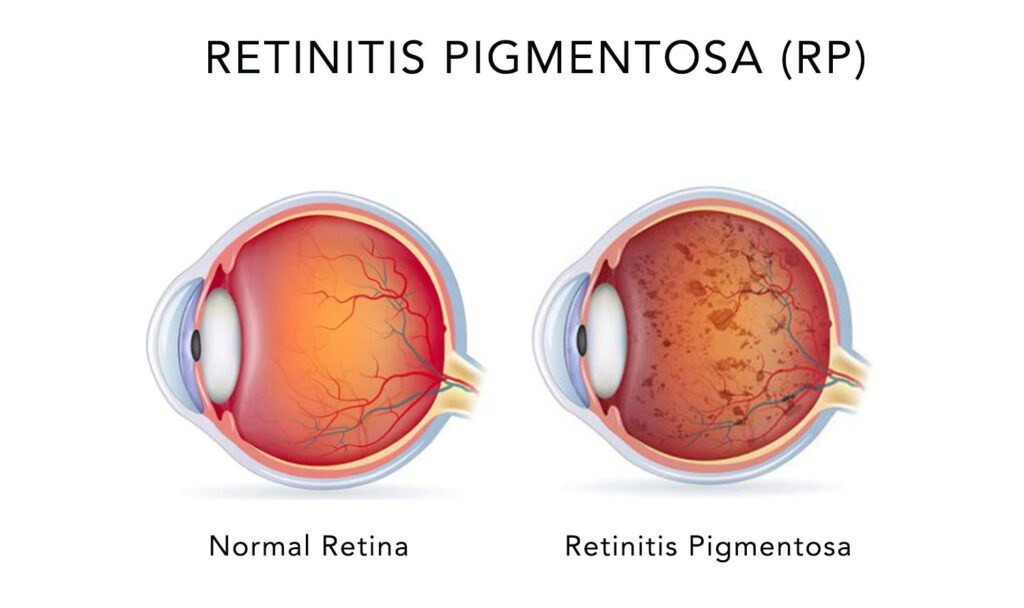
Retinitis Pigmentosa (RP) is a group of inherited eye diseases that cause gradual damage to the retina—the light-sensitive tissue at the back of the eye. Over time, RP leads to progressive vision loss, most often beginning with difficulty seeing at night and eventually affecting side and central vision.
Although RP is considered a rare condition, affecting about 1 in 4,000 people, it is the most common inherited retinal dystrophy worldwide
Night Vision
Peripheral Vision
Central Vision
Color Vision
At the moment, there is no cure for retinitis pigmentosa. Research shows that taking certain vitamins, preferably vitamin A, may help fight the progression of retinitis pigmentosa.
Other methods such as gene therapy, stem cell therapy, and retinal replacement may also be considered. Talk to your ophthalmologist for more information on any of these options.
What are the most common causes of Retinitis Pigmentosa?
Retinitis Pigmentosa is generally a hereditary disorder. That means you get it from your parents. However, 40% of RP patients have no known previous family history.
In these cases, the cause of RP may be another genetic disorder such as Kearns-Sayre syndrome, Bassen-Kornzweig disease, Waardenburg syndrome, Alport syndrome or Refusum disease. Although hereditary remains the key risk factor, some sources suggest prolonged, unprotected exposure to sunlight may accelerate vision loss.
How can Traditional Chinese Medicine and acupuncture treat Retinitis Pigmentosa?
What Happens in Retinitis Pigmentosa?
Retinitis Pigmentosa is caused by genetic mutations that interfere with the normal function and survival of photoreceptor cells in the retina.
- Rod cells, which are responsible for night vision and peripheral vision, are affected first
- As rod cells deteriorate, cones which control detailed and central vision can also become damaged
- Over time, usable vision narrows, often described as looking through a tunnel
This progression is usually slow and occurs over many years, though the speed and severity vary depending on the genetic subtype.
Common Symptoms of Retinitis Pigmentosa
Early and ongoing symptoms may include:
- Difficulty seeing in low-light environments (restaurants, dusk, movie theatres)
- Slow adjustment when moving from bright light to dark rooms
- Loss of peripheral (side) vision
- Tunnel-like vision as the condition progresses
- Reduced contrast sensitivity (colors appear dull or muddy)
- Flashing lights, visual snow, or shimmering sensations.
Possible Complications
Some people with RP may also develop:
- Cystoid Macular Edema (CME) – swelling in the central retina
- Early-onset cataracts
- Hearing loss (in conditions such as Usher syndrome)
When to Seek Urgent Care
Seek immediate medical attention if you experience:
- A sudden increase in floaters
- Flashes of light
- A dark shadow or “curtain” moving across your vision
These may indicate a retinal tear or retinal detachment, which requires prompt evaluation by a retina specialist.
How Retinitis Pigmentosa Is Diagnosed
Diagnosis typically involves a combination of eye exams and specialized testing:
- Dilated retinal exam: Identifies characteristic pigment changes and narrowed blood vessels
- Optical Coherence Tomography (OCT): Shows thinning of retinal layers and macular swelling
- Visual field testing: Measures peripheral vision loss over time
- Electroretinography (ERG): Assesses how well rods and cones respond to light
- Genetic testing: Identifies the specific mutation in approximately 70% of cases
How Traditional Chinese Medicine Approaches Retinitis Pigmentosa
In Traditional Chinese Medicine (TCM), eye health is connected to the overall balance of the body not just the eyes themselves. Vision is closely related to the health of three key systems: the Liver, Digestive system (Spleen & Stomach), and Kidneys.
- The Liver helps supply blood and nutrients to the eyes. When this support is weak, visual function can decline.
- The Digestive system extracts nutrients from food and delivers them throughout the body via the blood.
- The Kidneys support circulation and help ensure that blood and energy reach the eyes properly.
When one or more of these systems is underperforming, the eyes may not receive enough nourishment or oxygen. TCM treatment focuses on strengthening this internal network so blood flow, nutrients, and oxygen can better support retinal health.
How can Ophthalmic Acupuncture treat Retinitis Pigmentosa?
In 2014, Dr. Andy Rosenfarb ND, Lac and researchers from John Hopkins University tested the effect of a specific acupuncture protocol for the treatment of retinitis pigmentosa (click link for paper).
They found that 50% of patients showed measurable, significant visual function improvements after treatment, and the remaining 50% showed stabilization or mild improvements. Currently, Dr. Rosenfarb is the leading expert in the field of Chinese Medicine Ophthalmology for retinitis pigmentosa. His acupuncture treatment protocol can see advanced patients recover 5-15 degrees, and others recover the entire 90-degree field of vision.
Our practitioner Andrew has received extensive training from Dr. Rosenfarb and fully certified to treat Retinitis Pigmentosa and a number of other eye conditions. Acupuncture treatments have shown to increase blood flow to specific regions of the body. For RP, treatments have demonstrated increased blood circulation to the eye and retina. In doing so, this will bring oxygen-rich blood to the rod and cone cells of the retina.
What to Expect From Treatment at Our Clinic
Care for retinitis pigmentosa typically begins with an intensive treatment series designed to support circulation and retinal function.
- Treatment course: Most patients start with 10–20 treatments over a 2–3 week period
- Approach: A combination of specialized ophthalmic acupuncture techniques is used to stimulate blood flow and support remaining retinal cells
- Point locations: Hands, feet, scalp, and areas around the eyes
Important: Acupuncture needles are never placed into the eye. The closest points used are along the eyebrow and cheekbone.
We recommend having a comprehensive eye exam with an optometrist or ophthalmologist both before and after the treatment series. This allows for objective measurement of any changes and helps determine whether additional care may be beneficial. Individual responses vary, so ongoing monitoring is important.
It’s important to understand that acupuncture is not a cure for retinitis pigmentosa. The goal of treatment is to support existing retinal cells, slow further decline, and help optimize remaining visual function.
Many patients report temporary improvements such as expanded visual fields, brighter vision, or increased clarity following treatment. These effects often last several months. As changes gradually fade, some patients choose to repeat treatment to help maintain results over time.
If you or a loved one has been diagnosed with retinitis pigmentosa and are exploring supportive care options, we invite you to contact our clinic to learn whether our treatments may be appropriate for you.